"You're Not Crazy: Why Tiny Things Send You Spiralling (And How to Stop)"Ever wonder why small things trigger huge emotions? This is about understanding real trauma responses.by Fabienne Price

Have you ever snapped at someone over something tiny and then wondered, "Why did I react like that?" Or felt your heart race when your boss said, "Can we talk?" even though you've done nothing wrong? Maybe you avoid certain foods, struggle to trust people, or feel anxious in situations that seem perfectly safe to everyone else.
Most people don't realise these reactions aren't random; they're your mind and body responding to past wounds you may not even remember.

What Nobody Tells You About Life Wounds
Think about physical wounds for a moment. If you badly sprain your ankle, it might heal, but that ankle will stay sensitive. Cold weather makes it ache. You step carefully on uneven ground. Years later, you still remember to protect it.
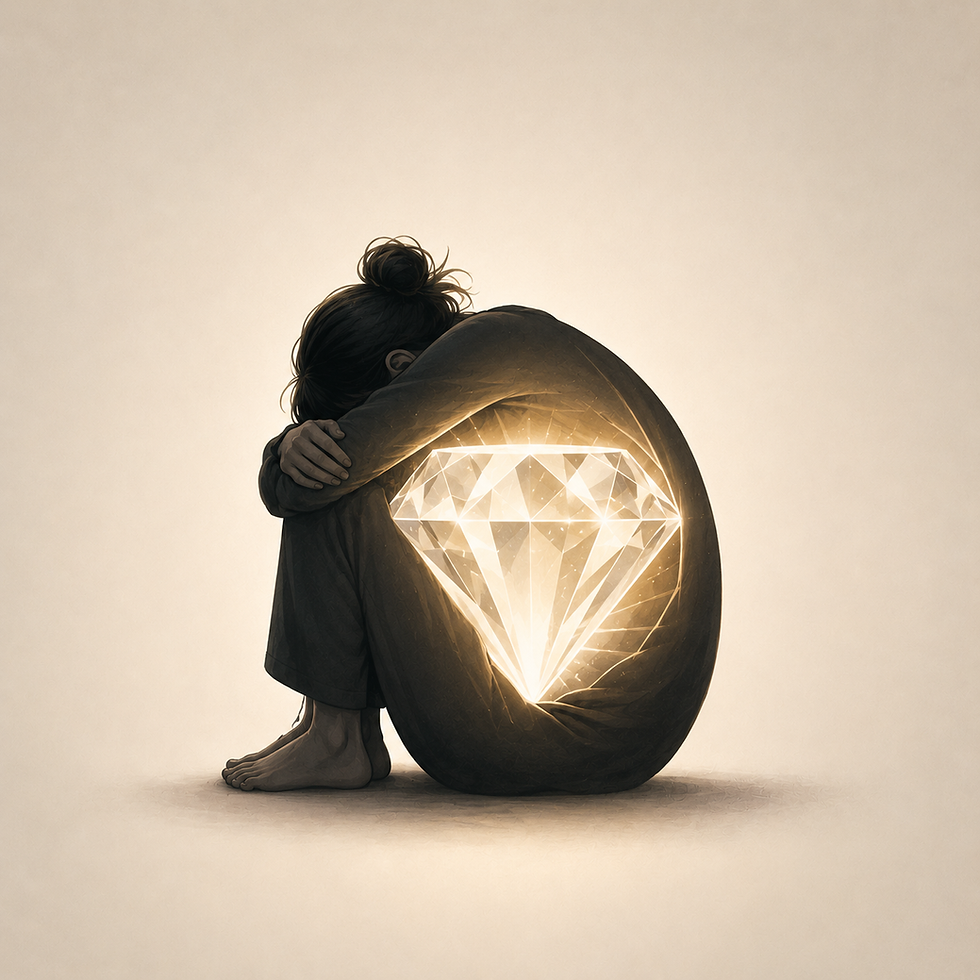
Psychological wounds work exactly the same way, except we can't see them. And because we can't see them, we often don't realise they're there.
A life wound is any experience that overwhelmed you—that felt like too much, too fast, with no way out. It didn't have to be dramatic. It just had to be more than you could handle at that moment.
The Wounds You Didn't Know Were Wounds
Let me share some examples of things that can leave lasting marks, even though they might sound "small":
Your parent frequently forgot to pick you up from school. You learned that people aren't reliable, and now you panic when your partner is five minutes late.
You got food poisoning from chicken at age seven. Now, 20 years later, you still feel nauseous around poultry and can't explain why.
A teacher humiliated you in front of the class. Today, you avoid speaking up in meetings, even when you have the best idea in the room.
Your family never had quite enough food. You now hoard groceries, feel guilty throwing anything away, and get anxious if the pantry isn't fully stocked.
You were in a minor car accident. Your body still tenses every time you approach that intersection, and you grip the steering wheel a little tighter.
Your feelings were regularly dismissed as a child. Now you second-guess every emotion you have and apologise constantly.
Do you see the pattern? All these reactions come from your brain trying to protect you based on past pain. Even though the moment is over, your system treats similar situations as threats.
Why You Keep Reacting to Things That "Shouldn't" Bother You
Here's the key thing: your logical brain knows you're safe now, but your survival brain hasn't gotten the message.
Your survival brain—the ancient, primitive part that's kept humans alive for thousands of years—doesn't care about logic. It cares about patterns. It says, "Last time something like this happened, we got hurt. Let's avoid it at all costs."
This is why:
You feel irrationally angry when someone criticizes you (your brain remembers being hurt)
You shut down emotionally when conflict arises (shutting down once kept you safe)
You can't relax even on vacation (relaxing once meant letting your guard down, and something bad happened)
You sabotage good relationships (getting close once led to abandonment)
You feel shame about your body (someone once made you feel your body was wrong)
You're not broken or overreacting. There's a real reason you feel this way.
You're having a normal reaction to an old wound that never fully healed.
The Reactions That Seem to Come From Nowhere
Sometimes these reactions are obvious—you know why you don't like dogs if one bit you as a child. But often, the connection isn't clear at all.
You might:
Feel inexplicably sad when things are going well.
Get angry when people try to help you.
Feel anxious for "no reason."
Struggle to accept compliments.
Push people away right when they get close.
Feel like you're watching your life from the outside.
Have physical pain with no medical cause
These aren't personality flaws. They're protective strategies your nervous system developed to keep you safe from experiences that once hurt you.
But here's the heart of it: what once protected you could be the main thing holding you back now.
You Don't Need to Remember for It to Affect You
Here's something that surprises people: you don't need to remember an experience for it to leave a wound.
Maybe you were too young. Maybe your brain blocked it out to protect you. Maybe it seemed so normal at the time that you didn't register it as harmful.
You might have no memory of:
Being left alone as a baby (but now you fear abandonment)
A medical procedure when you were very young (but now you panic in hospitals)
Your parents' constant fighting (but now you freeze during any conflict)
Never getting physical affection (but now you flinch when people touch you)
Your body remembers even when your mind doesn't.
Why "Just Get Over It" Doesn't Work
People who haven't learned about life wounds often say unhelpful things like:
"That was so long ago!" "Other people had it worse." "You're being too sensitive." "Just think positively!" "Why can't you just move on?"
If it were that simple, you would have already done it. You're not choosing to feel this way.
Healing a life wound isn't about just thinking differently—it's about helping your nervous system feel safe again. The key takeaway: safety comes from supporting your nervous system, not simply changing your mindset.
What Actually Helps
The good news? These wounds can heal. It takes time, patience, and often support, but healing is absolutely possible. Remember: small, consistent steps and self-compassion make a difference.
Healing usually involves:
Recognizing the wound exists. You've just taken this step by reading this. Noticing that your reactions connect to past experiences is huge.
Being compassionate with yourself. Your reactions made perfect sense given what you experienced. You were doing your best to survive.
Helping your nervous system feel safe. This might mean deep breathing, movement, spending time in nature, or working with a therapist trained in helping people heal from life wounds.
Processing what happened. Sometimes you need to revisit the experience—not to relive it, but to finally let yourself feel and release what you couldn't at the time.
Creating new experiences matters. Repeatedly experiencing safety, trust, or calm can help your nervous system learn to update its alerts. The takeaway: new, positive experiences help your brain relearn safety.
EMDR: Helping Your Brain Process What Got Stuck
One of the most effective approaches for healing these wounds is called EMDR—Eye Movement Desensitization and Reprocessing. I know, it's a mouthful. But what it does is actually quite elegant.
Remember how I said your survival brain gets stuck in the past, still responding to old dangers? EMDR helps your brain finally finish processing those experiences so they can become memories instead of present threats.
Here's what makes EMDR different: when something traumatic or overwhelming happens, your brain doesn't process it the way it processes normal memories. The experience gets stored in fragments—images, sounds, body sensations, emotions—all frozen in time. That's why when something triggers you, it doesn't feel like you're remembering the past. It feels like it's happening right now.
How EMDR Works
During EMDR therapy, you focus on a specific memory while your therapist guides your eyes to move back and forth (or uses taps or sounds that alternate between left and right). This bilateral stimulation mimics what naturally happens during REM sleep, when your brain processes the day's experiences.
As your eyes move, your brain starts reprocessing that stuck memory. The fragments begin to integrate. The emotional charge lessens. Your brain essentially "digests" what it couldn't digest at the time.
People often describe it like watching a movie of their experience rather than being trapped inside it. The memory doesn't disappear—but it loses its power over you.
What EMDR Can Help With
EMDR is remarkably effective for the kinds of wounds we've been talking about:
Single incidents (accidents, medical procedures, humiliating moments)
Ongoing painful experiences (neglect, criticism, instability)
Fears and phobias that seem irrational
Negative beliefs about yourself ("I'm not good enough," "I'm unlovable")
Physical reactions you can't control (panic, tension, avoidance)
The beautiful thing about EMDR is that you don't need to talk extensively about what happened. You don't need to relive it in detail. Your brain does most of the work, while the therapist creates a safe structure for processing.
Why EMDR Works When Talk Therapy Sometimes Doesn’t
Traditional talk therapy can be incredibly helpful, but sometimes talking about an experience isn't enough. You can understand intellectually why you react the way you do, but your body still responds as if you're in danger.
That's because the wound is stored in a part of your brain that doesn't use language—your limbic system, where emotions and survival instincts live. EMDR directly accesses this part of your brain, which is why people often feel shifts in their bodies and emotions during sessions, even without talking through everything in detail.
Many of my clients describe it this way: "I knew logically that I was safe, but I didn't feel it. After EMDR, I finally feel it."
What to Expect
EMDR isn't a quick fix, but it often works faster than people expect. Some wounds can shift significantly in a handful of sessions. Others, especially if they're connected to years of difficult experiences, take longer.
You won't leave every session feeling peaceful. Processing sometimes means temporarily feeling worse, as stuck emotions finally move through you. The key takeaway: discomfort during the process is normal and means healing is happening with support.
And here's what many people don't expect: as specific memories lose their charge, other areas of your life often improve too. That anxiety in meetings? It lessens. Those relationship patterns? They start to shift. Your body relaxes in ways it hasn't in years.
A Message for You
If you've ever thought, "Why am I like this?" or "What's wrong with me?" please hear this:
Nothing is wrong with you.
You carry wounds from a world that wasn't always kind, safe, or fair. Those wounds shaped how you see yourself and others. They're the reason you react strongly to things that might seem small on the surface.
Every outsized reaction is connected to something that once genuinely hurt.
You don't need to justify your pain by comparing it to someone else's. You don't need your wound to be "bad enough" to deserve healing.
If it hurts, it matters. If it's affecting your life, it's real. If you struggle because of it, you deserve support.
Where to Start
You don't have to do anything dramatic. Start small:
Notice when you have a big reaction to something small.
Ask yourself, "What does this remind me of?"
Talk to someone you trust about what you're experiencing.
Consider reaching out to a therapist, especially one trained in EMDR or other approaches for healing life wounds.
Practice being as kind to yourself as you'd be to a good friend
Your reactions are messengers. They're trying to tell you something about an old hurt that needs attention.
You've been carrying these wounds for years, or even decades. It's okay to finally set them down.
You deserve to feel lighter. You deserve to respond to today's situations, not yesterday's pain. You deserve healing.
And that healing is possible—one small, compassionate step at a time.