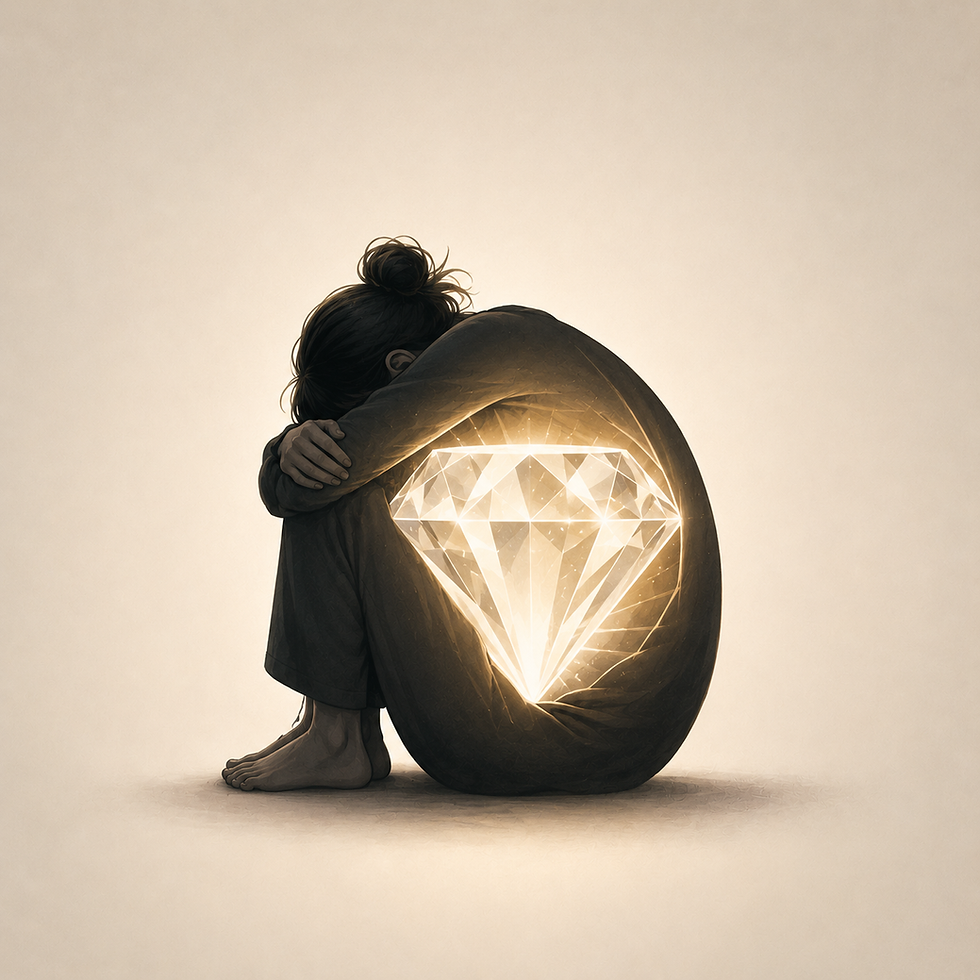
So Many of Us Choose to Stay in the Pain. And that's more understandable than you might think — a therapist reflects on why healing feels so hard ..

By Fabienne Price
The wound is the place where the light enters you.
— Rumi
I
The Thing Nobody Admits.
I've sat across from a lot of people over the years. People who've read every self-help book going, who've downloaded the apps, who can quote attachment theory back at me with impressive fluency. And still — when it comes to actually going in, to feeling what's really there — they hesitate. Sometimes for months. Sometimes forever.
I don't say this as a criticism. Not even slightly. I say that because it's one of the most misunderstood aspects of healing: the problem isn't that people don't want to get better. They desperately do. The problem is that getting better requires, at some point, going through something that feels a lot worse first. And that, if we're honest, is a terrible sales pitch.
Familiar pain is still pain — but at least it's yours. You've survived it before. You've learned, over the years, maybe, exactly how to manage it, how to go numb at the right moments, how to keep moving. Therapy threatens all of that. It says: What if we stopped managing and actually looked? And something in us — something very old and very sensible — says quietly, no thank you.

II. When Pain Becomes the Only Self You Know
There's something I've noticed with clients who've carried their wounds for a long time. The wound stops being something that happened to them. It becomes who they are. Not consciously — nobody wakes up and decides to define themselves by their suffering — but gradually, quietly, the story of what they went through becomes inseparable from the story of who they are.
If I let this go, what exactly is left of me?
That question terrifies people, even when they can't quite name it. And I think that's worth sitting with. Because if your pain has been with you since you were eight years old, or fifteen, or through a marriage that slowly hollowed you out — it has also been present with you in a way that very few things have. Letting it go can feel less like relief and more like bereavement.
Healing asks us to grieve not just what happened to us, but also the version of ourselves that formed around surviving it. That is genuinely hard. It's not a weakness. It's the most human thing there is.
✦ ✦ ✦
III. The Part Where We Have to Feel It to Lose the pain.
I wish I could tell people there's a version of this that doesn't involve grief. There isn't, as far as I can tell. Real inner work — not the kind that stays safely in your head, but the kind that lands somewhere in your chest — requires you to let things matter. To let yourself feel, maybe for the first time, how much something actually hurts.
A lot of us were taught, in one way or another, that this was not acceptable. That you cry quickly and move on. That you don't dwell. That resilience means not showing the wound. So when a therapeutic space opens up and says, "No, we can stay here —you don't have to rush" —it can feel not like permission but like danger.
Some people come into the room and are fine until the third or fourth session, when something cracks open just slightly, and then they cancel the next appointment and don't come back. I've seen it so many times. It's not flakiness. It's the system doing exactly what it was designed to do: protecting itself from the thing that once felt unsurvivable.
IV. The Seduction of Staying Spiritual But Staying Safe.
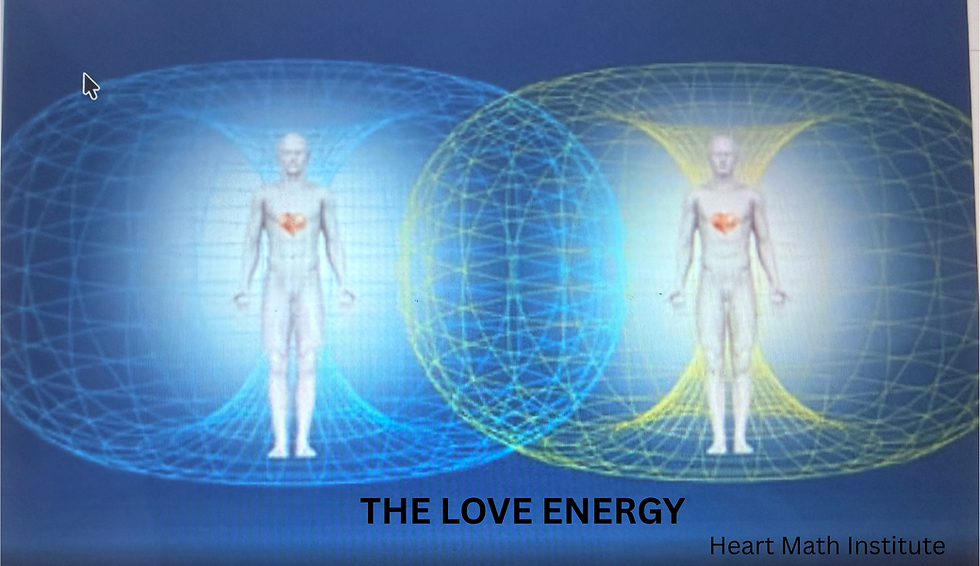
I want to say something gently about this, because it might rub some people the wrong way. There's a version of spiritual practice — and I've seen it a lot, in myself too, at various points — that is essentially a very beautiful form of avoidance. The crystals, the breathwork, the perfectly curated morning routine, the language of vibrations and manifestation. None of these things is bad in themselves. But they can become a way of hovering just above the pain rather than meeting it.
Real spiritual depth — the kind that the mystics wrote about, the kind that actually changes a person — tends to go down before it goes up. It involves what St. John of the Cross called the night of the soul. There's no shortcut around the shadow. You can't meditate your childhood out of your nervous system. At some point, something has to be felt and not just observed.
The wound doesn't care how you evolved. It just waits.
V On Being Asked to Trust the Person Sitting Opposite You
For many of the people I've worked with, the hardest part of therapy has nothing to do with talking about the past. It's the fact that they're being asked to be vulnerable in front of another person. And the last time they did that — really did that, opened something tender and real — it went badly.
So the therapy room becomes a test site for the original wound. Is it safe here? Will this person use what I say against me? Will they leave? Will they think less of me? These aren't neurotic questions. They're entirely rational questions, given what the person has lived through. The fact that they come at all is, genuinely, an act of courage.
And I think this is worth naming plainly: if you've tried therapy and it didn't work, or you've started and stopped, or you've sat outside the therapist's door and driven home again — that doesn't mean you're broken or beyond reach. It might mean the timing wasn't right, or the relationship wasn't the right one, or the part of you that's protecting the wound was doing its job too well that day. That's not failure. That's very ordinary human self-protection.
VI. What Healing Actually Looks Like (It's Not What People Expect)
People often come in expecting therapy to help them understand something. And understanding does happen — but that's rarely what shifts things. What actually shifts things tends to be messier and quieter than that. It might be the moment you cry about something you've told yourself you were over. Or the session where nothing much seems to happen, but you drive home feeling slightly lighter in a way you can't explain.
Healing is not the erasure of what happened. It is, I think, the gradual process of the past becoming the past — rather than something that is, in some internal sense, still happening right now. The memory stays. The scar stays. But the charge drains slowly from it. It loses its grip on the present moment.
That process is absolutely real, and it works — not for everyone in the same way or at the same speed, but it works. Pain that has been frozen for decades can move again. Parts of a person that went quiet to survive can come back online. I've watched it happen too many times to have much doubt.
The question is, can this person ever heal? In my experience, it almost always can. The question is just: is today the day they're ready to begin?
The wound is the place where the light enters you.
— Rumi